TutAR - Augmented Reality based teaching app
Learn More >TutAR - AR Platform for teachers

Breathing, a non-stop process happening in all living system. Ever wondered how it happens? How many organs are involved? Yes, we all know it is the lungs that help us to breath. But is it only lungs? Does all living organism have lungs? Well, the questions are endless. In humans, it is the lungs along with the nasal cavity, trachea, bronchi, alveoli, diaphragm that constitutes the respiratory system.
Lungs are spongy muscular organ situated in the thoracic cavity, near the backbone on either side of the heart. The lungs are protected in a bony cage, known as ribcage. Respiration starts with breathing. We breathe in air, through our nostrils. When we breathe, air enters into the nasal cavity through our nostrils, passes through the trachea into bronchi, through bronchioles enters the alveoli. It is in the alveoli where gaseous exchange takes place. Alveoli are filled with minute blood vessels called capillaries. The air enters the capillaries and into the bloodstream. It is then circulated to the entire body.
When we inhale, the diaphragm contracts and move downwards, creating space in the thoracic cavity for the lungs to expand to take in air efficiently. Similarly, when we exhale the diaphragm relaxes and moves back to its domelike shape forcing air to move out of the lungs. This air enters the alveoli, through bronchioles via bronchi into the trachea is exhaled out through our nostrils.
Objects are classified into three types based on the amount of light that can pass through them. They are opaque objects, transparent objects and translucent objects.
OPAQUE OBJECTS
Objects that do not allow light to pass through them are known as opaque objects. Light rays cannot penetrate through them. This means that one cannot see through such objects. Wood, stone, metal etc. are common examples of opaque objects.
TRANSPARENT OBJECTS
The materials through which we can see clearly are called transparent objects. Transparent objects are the type of objects that pass almost all light to pass through them due to which the objects on the other side are clearly visible. Glass, water and air are examples of transparent objects.
TRANSLUCENT OBJECTS
Objects that pass light to pass through them partially are called translucent objects. Translucent means semi – transparent. Materials on the other side of such objects can be seen, but not clearly. Polythene, butter paper, thin plastic sheet and designed glass are common examples of translucent objects.
Pulikali (Tiger Dance) is a traditional folk art performed as a part of Onam celebration in Kerala. On the fourth day of Onam, artists paint their bodies like tigers and dance with the rhythm of traditional percussion instruments. This festival is used to be conducted at the Swaraj Round in Thrissur district.
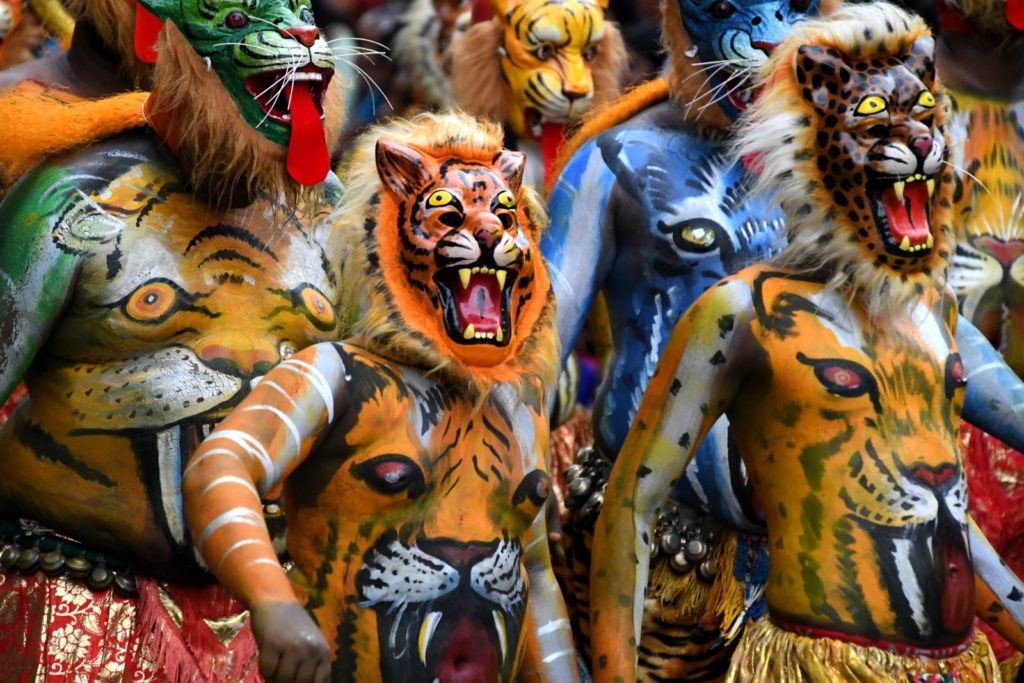
Lakhs of people used to join this festival as visitors. This year due to the existing pandemic crisis prevailing in the state, it's impossible to hold such a large festival.
For every Thrissurkkaran, Onam celebration is incomplete without Pulikali.
So with the help of Augmented Reality, we are bringing that experience back to you.
Download TutAR app to enjoy Pulikali using Augmented Reality.
TutAR is an AR platform that helps teachers to guide students through simple AR visualizations of complex ideas so that students can understand the fundamentals instead of mugging up lessons.
For decades Indian education has been focussed on instruction based teaching and repetition learning. Teachers and parents instruct students to memorize texts and vomit them out on the exam sheet. The traditional methods of learning have been rewarding accuracy rather than curiosity. But now this has been changed to online and the single component of physical communication is cut down.
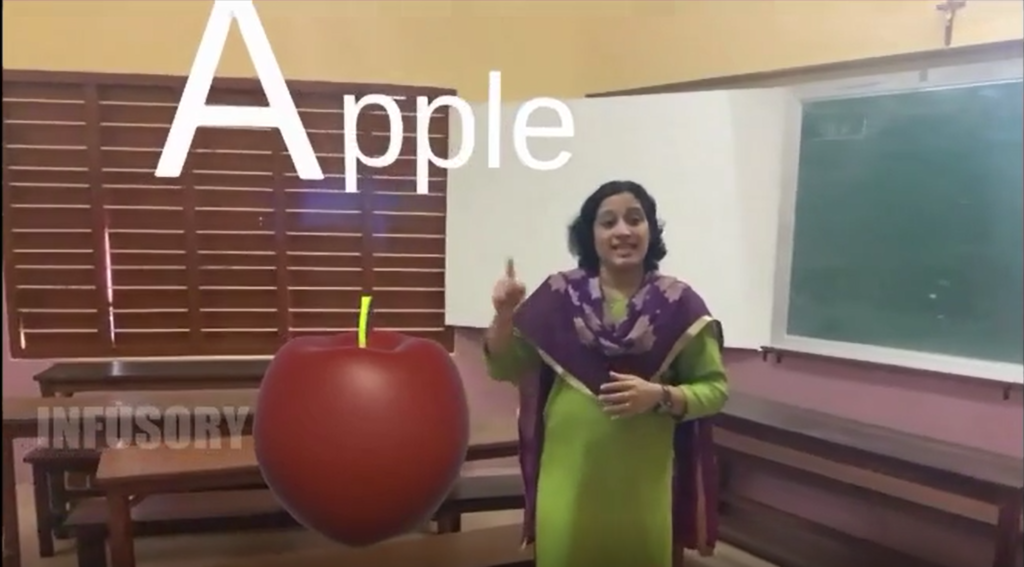
We, Infusory, are committed to the society in delivering a technology-based solution in these crises. We have proven it too.
Here we introduce AR for interactive learning for kids.
The Next Reality Classroom is a future-proof initiative by Infusory where the study is no more boring but more fun, engaging, and interactive, made possible by Augmented Reality. TutAR is the first product in the Next Reality Classroom product lineup. The perks of this magical technology include: students being able to visualize and have immersive learning of the subject matter. It aids the faculties by being able to teach the students more effortlessly and in helping the students to test out their knowledge practically.
TutAR comes with preloaded Augmented Reality content apt for all subjects. You can stream the amazing content through any video conferencing software that supports screen sharing, record unique videos interacting with the augmented objects and easily share it in social media with a single click, that too without any green screen setup.
Remember dissecting a frog in science class? Our children can still do it and understand the functioning of a living being’s body without harming it.
If you know how to use a basic smartphone, then you do not need any other technical expertise to use this platform. We provide the content loaded device to the school and train them on how to set up and teach with these technologies.
TutAR is now available in Google Play Store. Download now and upgrade your classrooms.
For more information, contact us.
Coronavirus is spreading rapidly all over the world. Since there is no vaccination available, the only way to limit the spreading is taking precautions such as wash hands with sanitizer, wear face masks in public places, and social distancing.
World Health Organization has recently advised wearing masks in the public place to fight against the spread of COVID-19. To promote the usage of masks in support of the #breakthechain campaign launched by the Government of Kerala, Infusory is introducing #ARMaskChallenge. An innovative augmented reality challenge to spread awareness about the usage of face masks.
Open bit.ly/armask20 on Instagram or bit.ly/armask20fb on Facebook. When we open the camera, the filter shows coronavirus floating around us until we choose to tap and wear a mask. Thus stressing the intensity of the situation and the importance of wearing a mask when you go out.
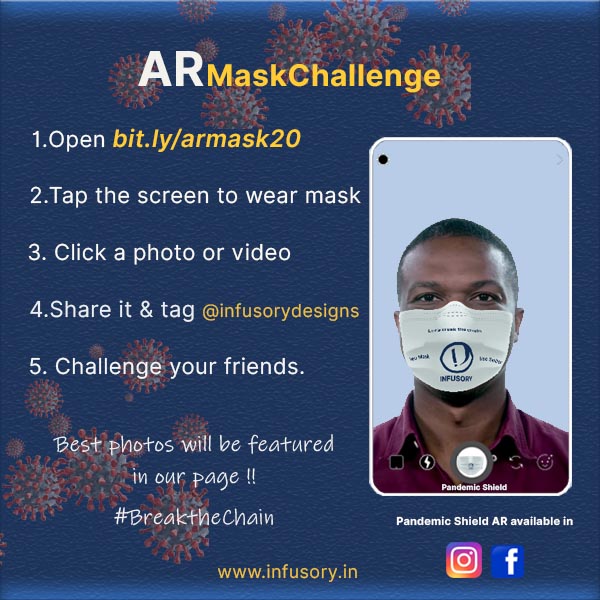
Capture your photo or video using our Pandemic Shield AR filter on Instagram or Facebook camera, share it in your feed or story tagging @infusorydesigns, and get a chance to be featured on our page. We initiated this campaign as a challenge so that friends can tag and challenge each other and spread the message to break the chain.
Come let's fight against the epidemic together.
Let's wear mask and promote the usage of mask. We shall overcome.
Facebook has recently introduced an option to augmented reality (AR) ads through FB mobile feed. AR ad lets people interact with our products and brands through Facebook. To publish an augmented reality ad, we need to create an AR filter or effect using Spark AR. Spark AR Studio is a software provided by Facebook to develop augmented reality filters and effects for Instagram and Facebook app camera. You can download it free from the official website of SparkAR.
After installation of Spark AR Studio, you need to log in with Facebook credentials to enter the development environment.
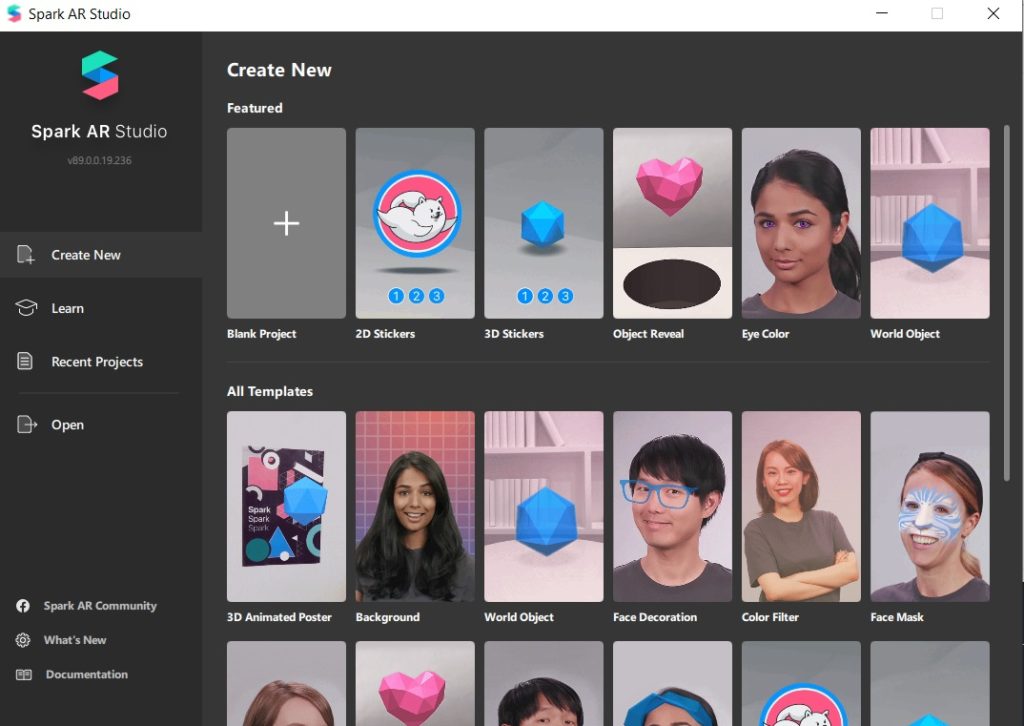
Since the entire world is under the threat of COVID-19, let's see how to set-up an awareness campaign about the importance of using face masks.
Select Create New from the panel of the left side of the window and click on the Blank Project. Then development will open up.
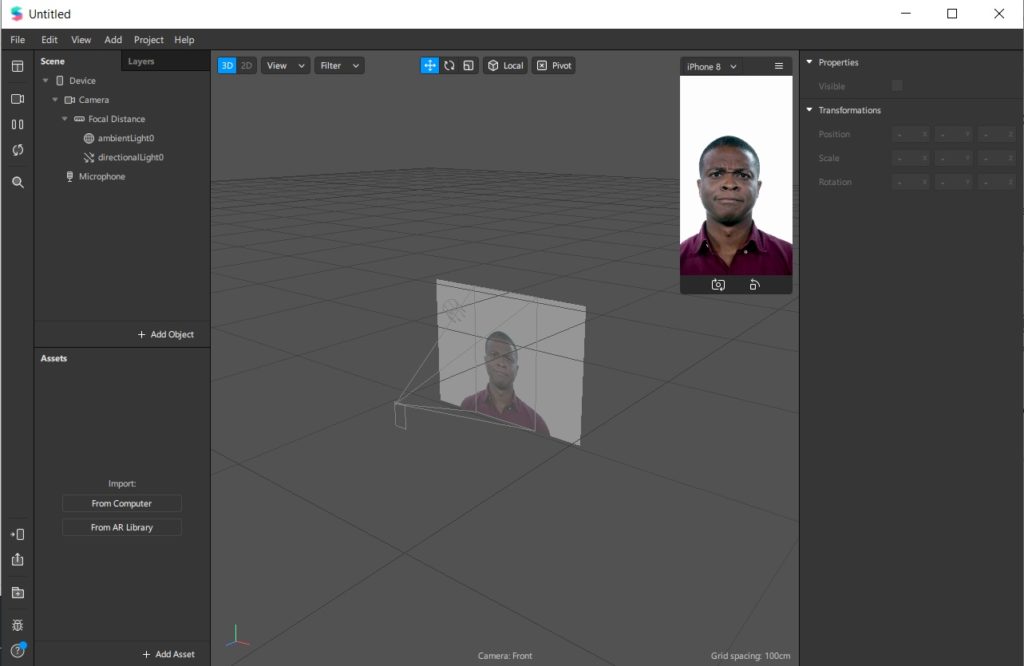
You can see a placeholder object in the central panel. That central panel is called the Viewport where you build the filter.
You can see a small window at corner showing the screen of iPhone 8. This is the Simulator where you can preview your work. Using the drop down you can change the Simulator to another device.
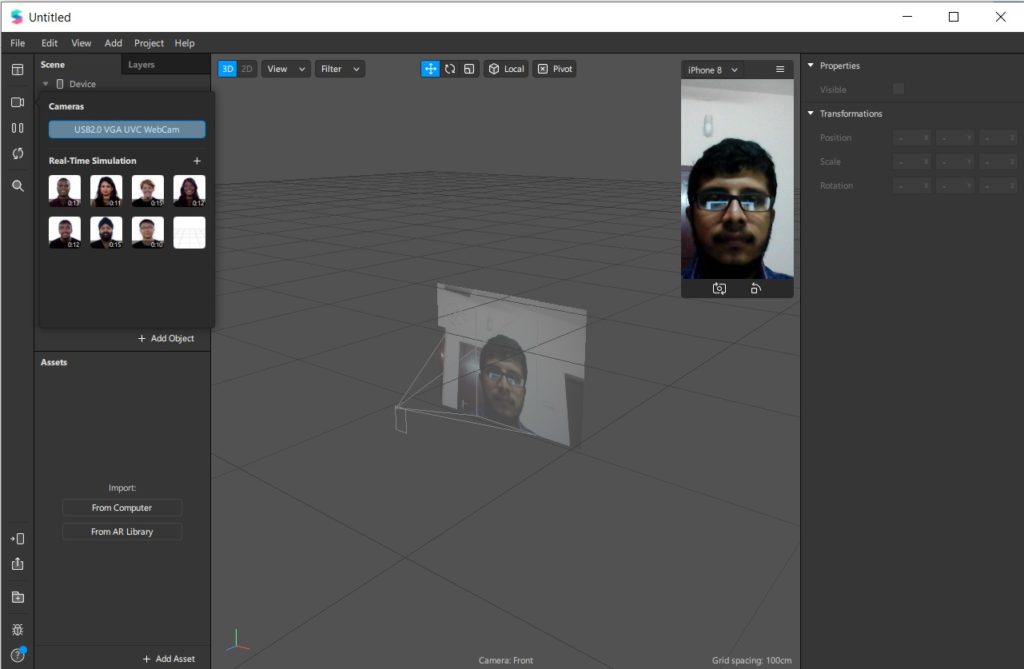
You can change the face showing in the simulator by clicking the Video icon on the left side panel. From options either you can choose from different types of videos given like face of men of women with different skin tones or you can turn on the webcam of your laptop by pressing Camera option and you can test effects on the live feed from the webcam.
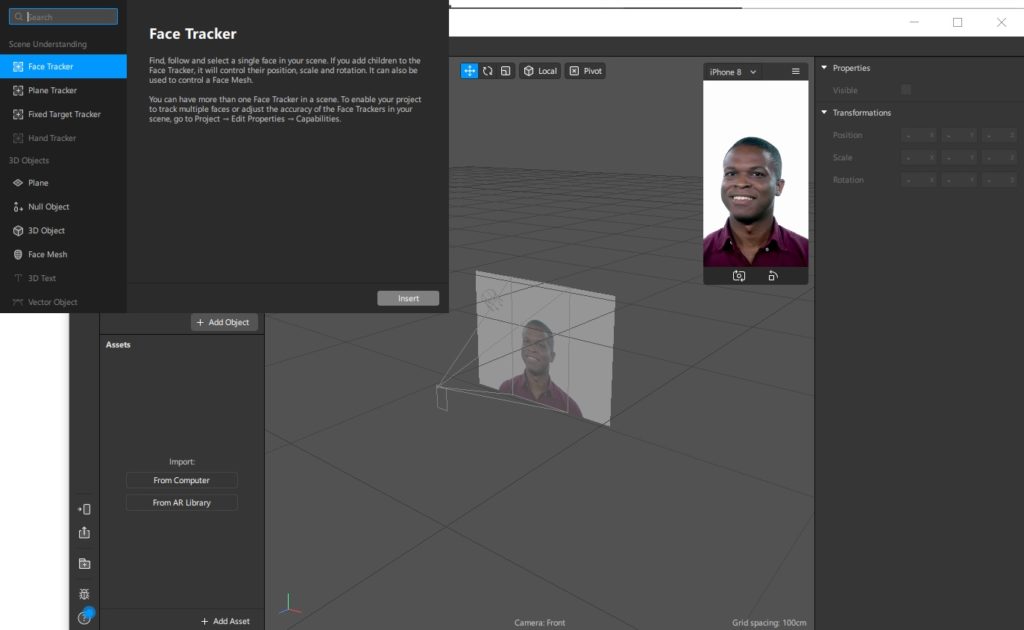
Click Add Object on the scene window and the select Face Tracker from the list of objects. Face Tracker is used for tracking the movement of the face. After that again click Add Object and from the window, choose Face Mesh. Make face mesh as the child of Face Tracker.
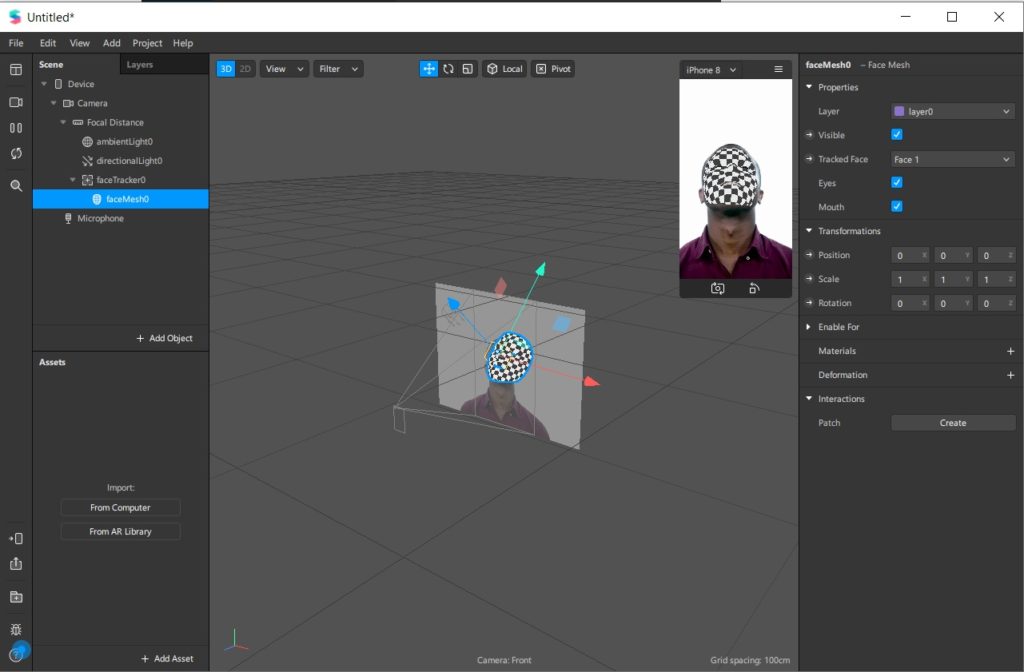
Face Mesh is a 3D model of a face. Select Face Mesh in the Scene panel, click + next to Materials in the Inspector. Then you can see the new material in the simulator.
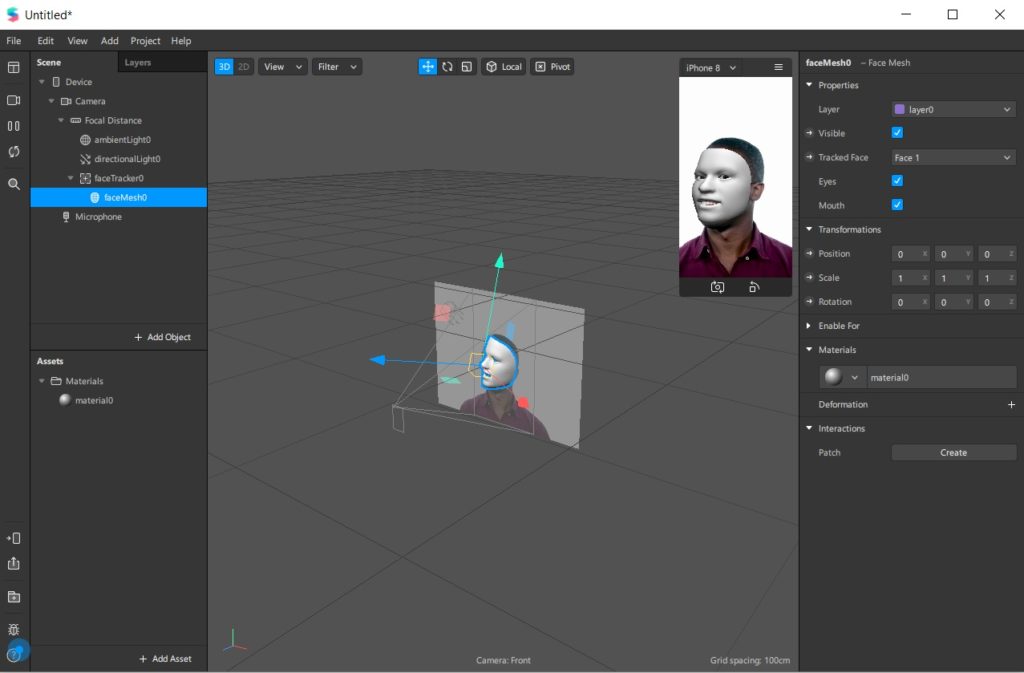
Now you need to add texture to the material. It is using this texture, you can create custom masks. For designing custom texture, a reference texture is required. Go to Download Face Assets in the Help menu. Then a website will get opened in your browser. From the website download Face Reference Assets. Unzip the file and open the Textures folder and using photoshop open faceMasculine.jpg
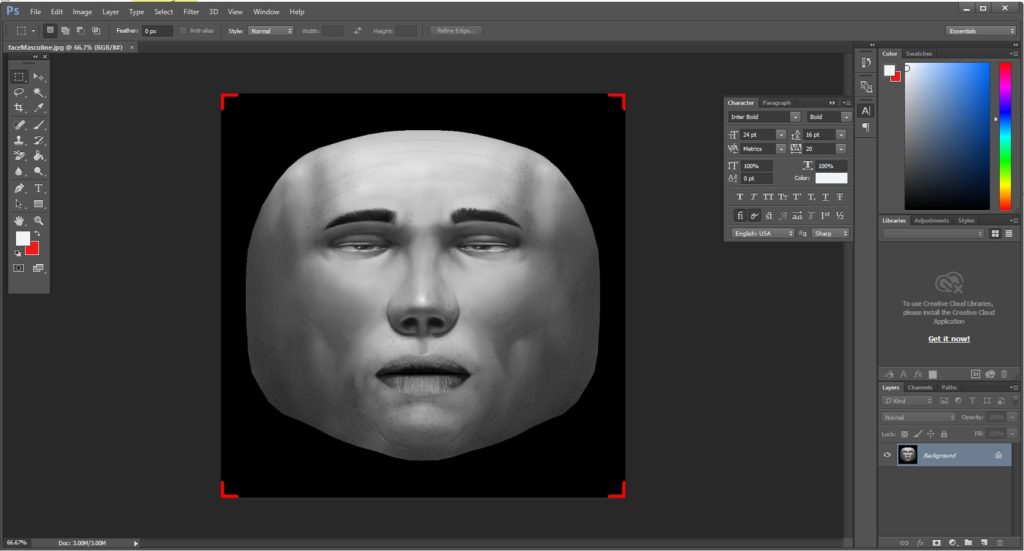
Place the required filter or images on Reference Texture and hide the layer of Reference Texture and save the texture in PNG format and drag the texture to Spark AR Studio.
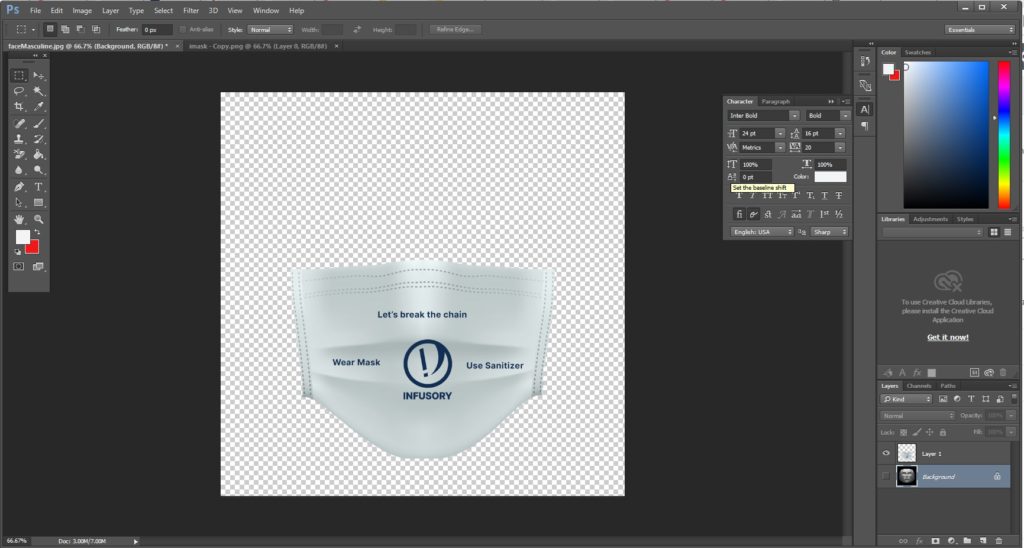
Click on Material and select the texture created in the Texture option of the Inspector window. We used Shader Type as Flat and disabled Mouth tracking in Face Mesh since we used a shader of the mask. Choose these options according to your requirement.
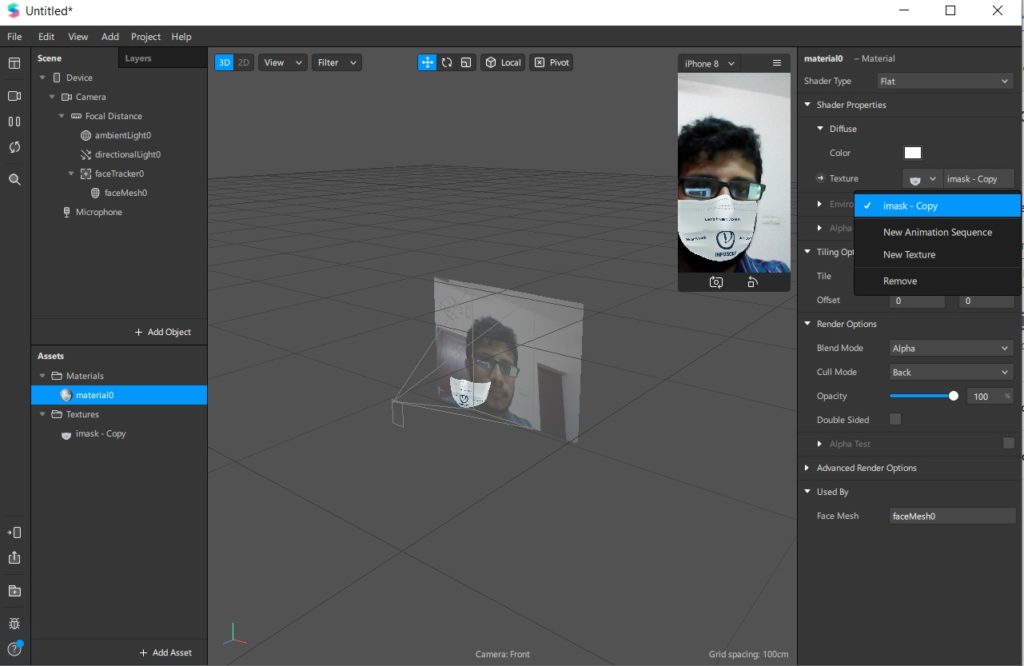
Your filter is ready !!!
You can also test your filter using the phone by clicking on the Test on device option on the left sidebar and can send links to Facebook and Instagram. You can share the link for Instagram or Facebook thus obtained. But maximum view count is restricted to 200 per day.
There are many features in Spark AR like you can give interactions such as tap, swipe, etc, use gestures to interact with filters, cool animations to 3D filter. We will be uploading a detailed video about those features soon on our Youtube channel.
After creating the effect, click on the Upload button the left sidebar to upload your filter to Spark AR Hub where it gets published after the review.
The review process may take up to 10 business days.
What if we can use augmented reality and virtual reality in our education system? We were also curious about how students especially school students react with immersive learning.
To know their response, we started a new campaign, Know the Next Reality in which the immersive experience of augmented reality and virtual reality is introduced to school and college students across Kerala.
Actually we got stunned by the response from kids when they saw their favourite superheroes through augmented reality. Students enjoyed the VR guided tour through which they experienced what they saw in their textbooks.
What our tension was whether they could use the virtual reality without any fear. But they simply blend in the virtual environment with the first experience itself.
This made us think, why can't we setup AR/VR labs at schools which led us to the idea of Next Reality Labs in which students can experience what they learn.
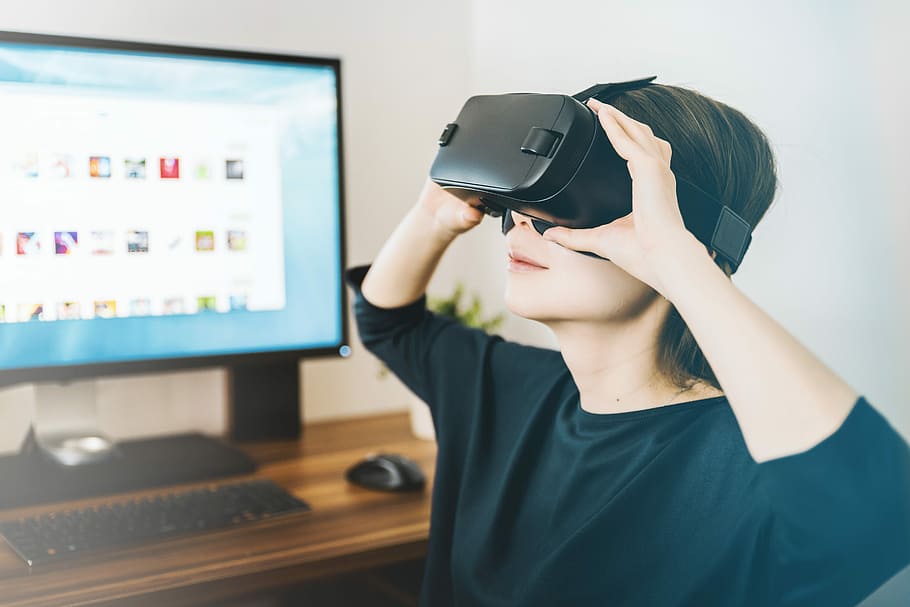
The following are the benefits of setting up Next Reality Labs at schools and colleges.
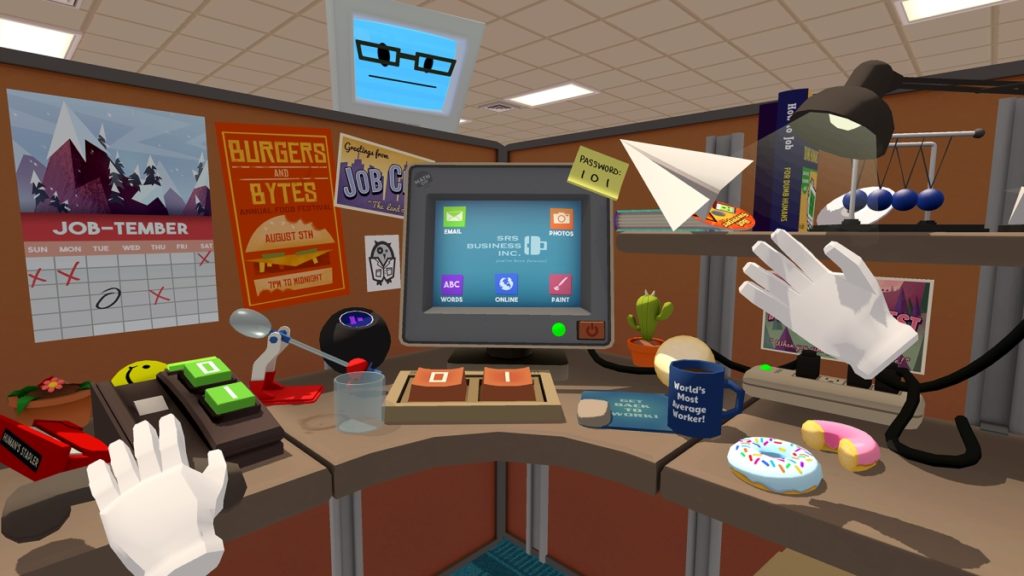
We set up virtual reality labs with standalone VR headsets. Oculus Go is the most economical standalone headset that can provide a high-quality virtual reality experience to students. These headsets can be used to watch 360-degree VR videos related to the curriculum.
Also, students can do experiments related to physics, chemistry, and other subjects through VR. For this purpose, Oculus Quest is included in our lab package since it provides more features to interact with virtual objects.
Our AR desk, and specialised curriculum based on the existing syllabus, students can learn various concepts of Physics, Chemistry, and Biology through AR visualisations and VR guided tours.
If you wish to make your students ready for Next Reality, contact us now.
After the success of our first project in the Malayalam movie industry, with the Augmented Reality promo app called the 919 Challenge for the movie Nine, starring Prithviraj, we were welcomed to do something of the same sort for Prithviraj's directorial debut, Lucifer.
This was a big deal for us because instead of the earlier treasure hunt style AR application, this time we had the opportunity to bring in legendary actor Mohanlal, for our project. Obviously, we were excited beyond words. We were getting ready for one of the biggest exposure projects we have ever done in Infusory.
The outlining plan was to make an "Act With Mohanlal" type of situation where an AR hologram of Lalettan could be placed anywhere in your home while you show your acting prowess near him. This also involved sharing the resulting video in social media platforms with a hashtag campaign that would let the star himself choose the best ones. The winners would then get a chance to meet Mohanlal and spend time with him!
We knew from this moment that this was much bigger than we expected. We'll get to do a shoot with the megastar and also launch a campaign with him. Moreover, the movie Lucifer was highly hyped as a mass entertainment movie since Prithviraj was going to direct a Mohanlal movie.
We prepped ourselves for ways to make the execution perfect. We knew we need to get a smooth, all-device compatible AR hologram working in a matter of weeks.
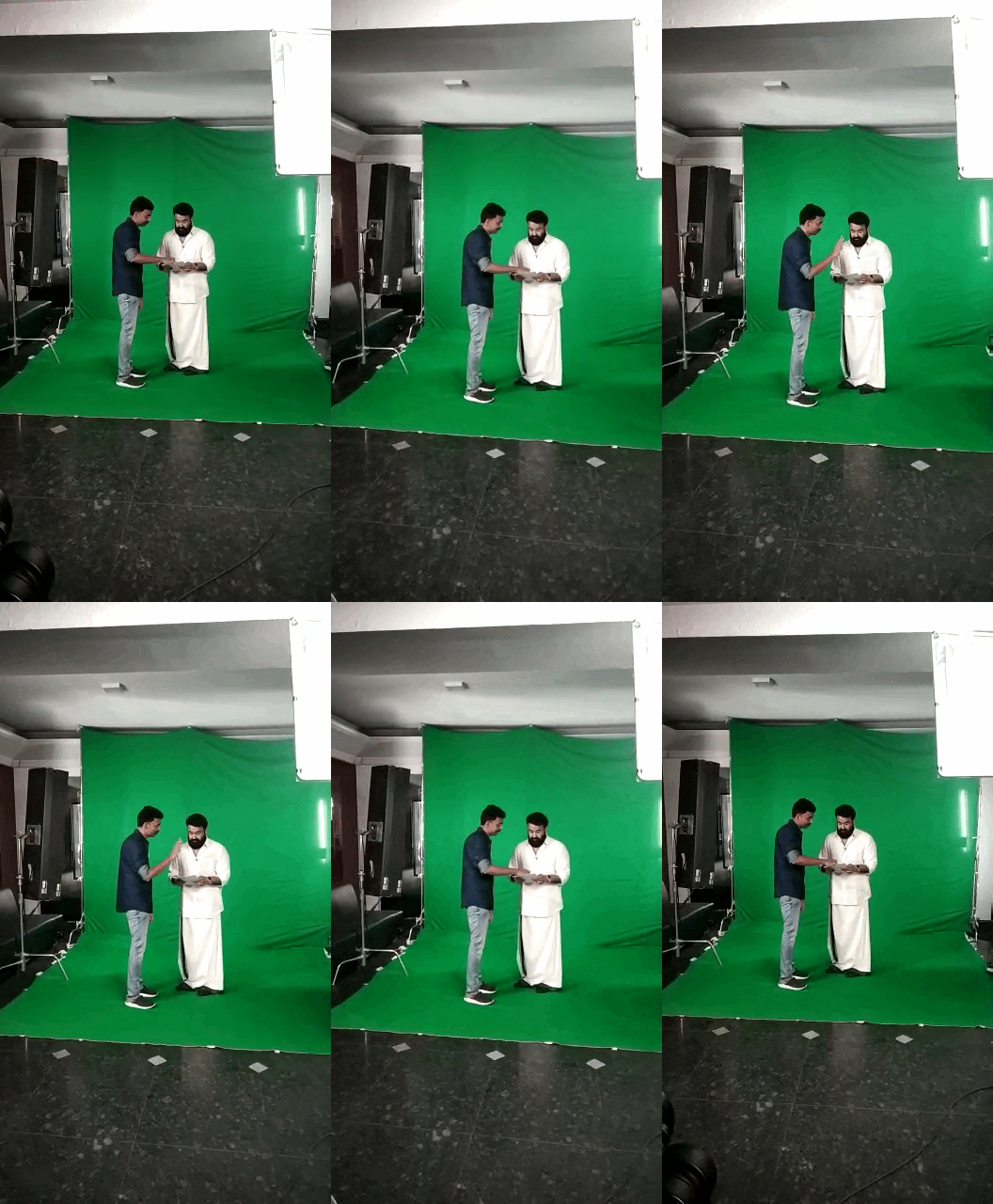
Like our COO Shyam Pradeep's recent LinkedIn post, the first thing I did was to decide whether to use a 2D or 3D version of Mohanlal for the hologram. Both had their benefits and shortcomings. If it was 3D we will have to 3D map Mohanlal, which meant more cost and time. But 2D was less realistic. We finally decided to use 2D, given how short the timeline was. We decided to use a green screen video and rotoscoping to get a hologram-like video that can be placed in AR.
We first used an image target identification setup to place the "twin-hologram" of our volunteering test subject, Shyam. This was problematic even though we did it as a test. The video wouldn't align to the floor and was dependent on the height of holding the image target.
Thus we decided on a ground plane orientation mechanism. This was where the device compatibility issues begin.
By now, we had to shoot the green screen videos with Mohanlal himself as the deadline was getting shorter. Thomson, our CEO, had to go to Chennai at the studio where the shoot was happening. Everything was set up and then walks in this man of enormous aura and grandiose. He aced through his lines like a pro. (which he is, obviously) We obtained the required videos with his iconic voice and acting mannerisms, where he was pretending to watch the app user act out his favorite movie scenes.
Meanwhile at the Infusory office, I was on a struggle of another level. The video capturing part after placing the AR was laggy as hell. And the challenge is useless without the recording part! After days (and nights) of battling device compatibility issues and recording stutters, looking into external Unity plugins to help with the stutters and crashing of the app, the eureka moment was gifted to me by sheer luck. Somehow we were able to make the AR and recording mechanism work in most device we tested. It would take me more than a paragraph to describe the struggles (almost giving up) to get it running. For the first time in my project endeavors, it dawned on to me that, getting an app implemented is also about getting it working on more than my phone/laptop.
We crossed the deadline by a few days nevertheless, but it was ready. The Lucifer Challenge in association with Radio Mango and Lucifer Movie was as good as ready! That morning we were treated with a Facebook post by Mohanlal itself, mentioning the challenge. And boy, were we excited.
The submissions slowly started rolling in, in between reviews of compatibility issues. But we were expecting that. Augmented Reality in phones are nowhere near the compatibility that we'd rather like. It was too early and most phones didn't have the support for it. That's why we had to settle for a fast running implementation than a well running one.
I, on the other hand, learned a lot from this one project. Firstly, it is true that the phenomenal actor and megastar who Mohanlal has become, has a special kind of aura wherever he goes and whatever he does. Some sort of unexplainable grandeur, like I mentioned earlier. Second, an app isn't complete unless it works perfectly in most devices and use cases. Third, we as user experience designers should use the application from the point of view of a layman who is using it for the first time, not like us developers who know where to point and what to click.
To close it off, coming from humble beginnings, we never imagined a day so soon, to get to work with the Malayalam Movie industry we Mallus are very proud of. We didn't expect to be in the same room as our acting idol, shoot videos with him, launch a campaign with him. It just seems, hard work always pays off with some amount of magical luck sprinkled in between.
Originally published at https://deviantmatter.com on May 8, 2020
What if you can meet your favourite superheroes in real life ?
Imagine you meet Iron Man and have dance with him. Excited !!
It's not a dream anymore. Now you can see and interact with your favorite characters with our big screen augmented reality shows.
For the first time in India, we introduced the unique opportunity to meet Avengers through our augmented reality photo booth at the IEDC summit 2019 held at Sahrdaya College of Engineering & Technology.
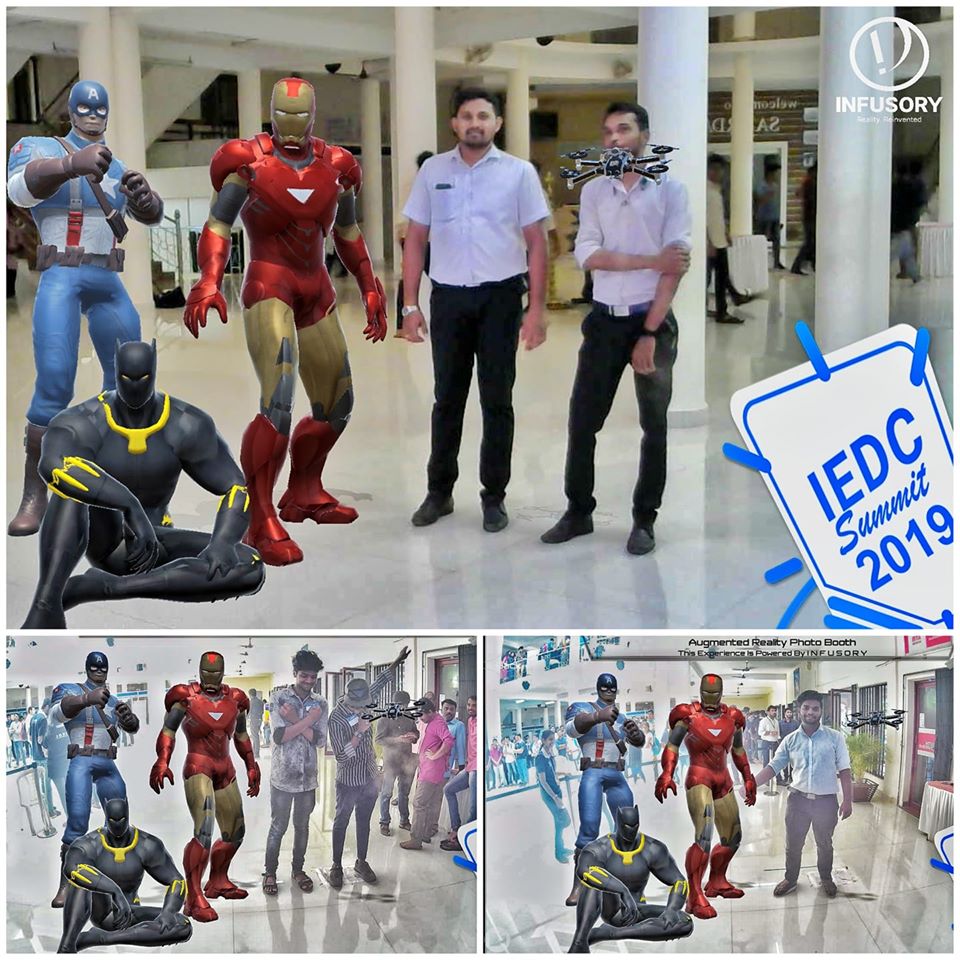
And we got a great response from participants. Most of them got amazed by seeing their favorite characters. 250+ participants visited our Augmented Reality photo booth sharing the big screen and captured their photo with the Avengers.
Actually it was a pilot run. We didn't expected such a huge response from the public. By this event, our team became more confident about the such AR shows.
Our team did research and designed another augmented reality public show for the first-ever Thrissur Shopping Festival held during December 2019. Since it was conducted during Christmas time, we designed an AR show with Santaclaus and other characters related to Xmas.
This time we got more response from the public. More than 1000 participants visited our show and they interacted well with the Santaclaus dancing and singing. It was conducted at the center of town which pulled the attraction of crowd attraction very much.
So if you wish to attract a mass audience to your event, contact us to set up custom augmented reality shows and photo booths at your space.
Before going to the virtual reality industrial training, let's have a look at current scenario of industrial training.
Training and development include improving the efficiency of workers inside organizations. Training has been utilized in industries for as long as quite a few years. Despite the fact that training requires investments of numerous kinds, there are several advantages to training and development.
However, if the training and development are not strategic and pointed at specific goals, it can lead to more harm than good.
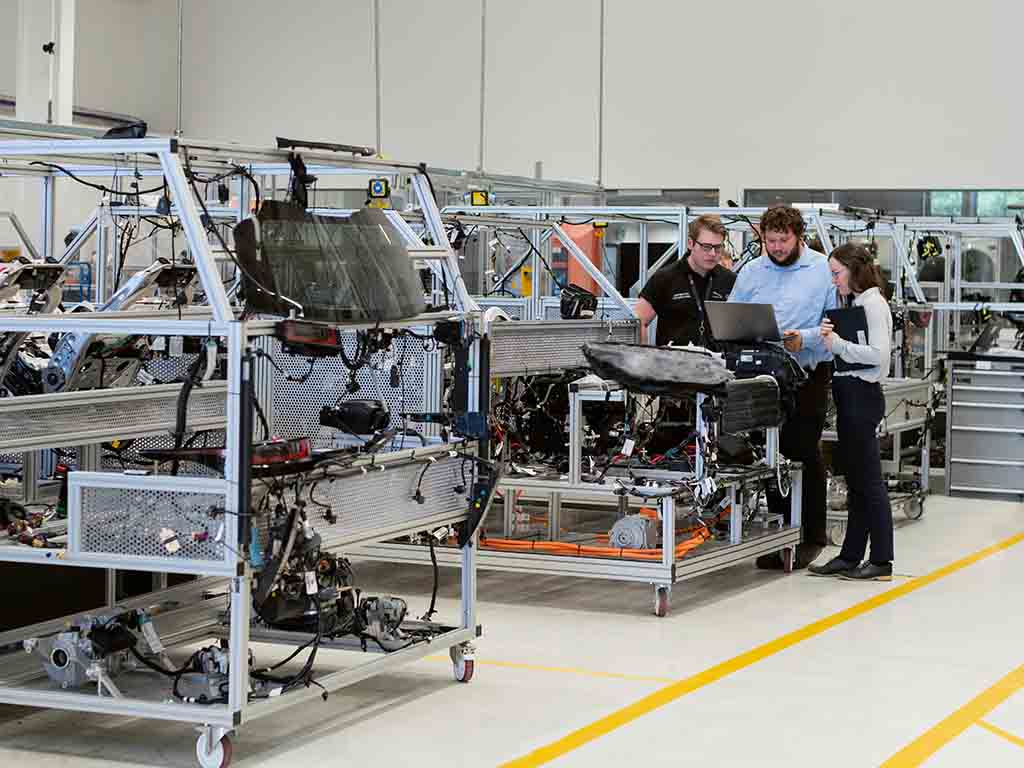
But there are many disadvantages to the current method of training such as
So how can these problems be fixed?
By introducing XR simulators especially virtual reality (VR) simulator systems, these problems can be solved to a greater extend. Let's check out how.
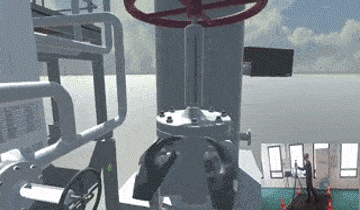
By using XR simulation systems, hands-on training experience can be provided without any physical boundaries since the 3D model of any machinery or equipment in which training required can be simulated in virtual reality with the help of computer graphics. Trainees can interact and operate the machines as in real-life situations with the help of controllers provided with VR headsets.
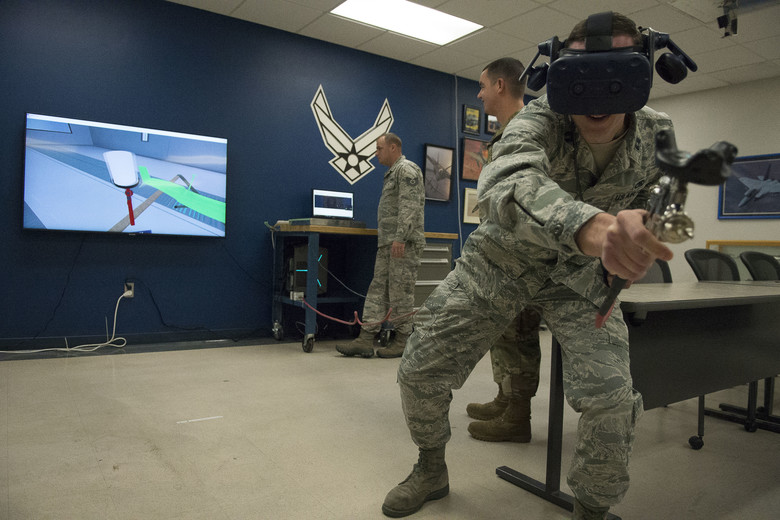
If the training is done using physical machinery, trainees cannot experiment with it since the machines are costlier. But the XR simulation system provides a unique opportunity to learn in the trial and error method. It also helps trainees to learn from mistakes.
Training can be done at the same place or in different places at the same time with these systems so that it even eliminates the geographical boundaries of trainees and they can get trained as a team.
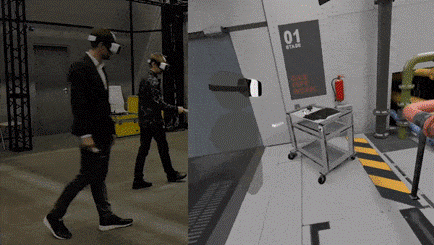
Step by step modules helps the trainee in self-learning and also it enforces the use of safety equipment and measures during work so that the safety-related accidents in the workplace can be reduced to a greater extent.
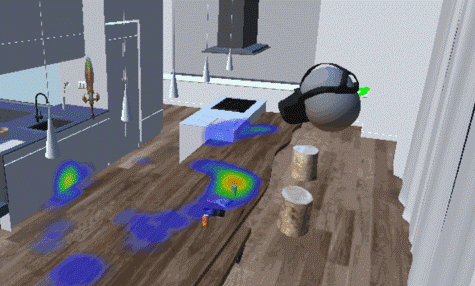
This is the non-replaceable feature of the XR system through which the attention span and attitude of the trainee to the various situations during training can be analyzed by tracking head movement and other parameters of trainee using AI algorithms. It also gives information on how accurate the trainee is doing the work and after how many attempts he gets to succeed.
Overall the industrial training gets simplified just like a game with these XR systems. Gamifying the experience motivates the trainees to perform better
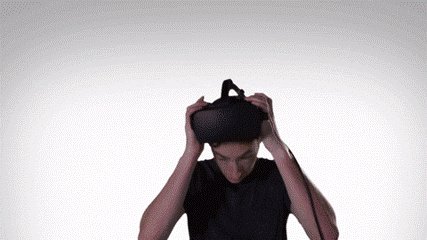
This is how XR simulation systems revolutionise industrial training.
